Discover One of New England’s Largest Cutlery Selections — Right Here in Beacon Hill

Paige Knight | 15 hours ago

Cutlery 101: The Three Essential Kitchen Knives

What do a college student who is learning to feed themselves, a home chef who hosts frequent dinner parties, and a seasoned professional chef all have in common? They all need kitchen knives. Knife aficionados own between 11-20 knives on average, according to a 2020 Red Label Abrasives report, but what if I told you that you only need three knives to become a whiz in the kitchen

Let’s talk about the “Big Three” essential knives that every cook needs, factors to consider when deciding on the best kitchen knives, and which knives the expert team at Blackstones of Beacon Hill suggests.

The Big Three Best Kitchen Knives

Most people don’t know what knives they need, so they just buy a knife set and call it a day. While this can take the guesswork out of picking kitchen knives, knife sets often come with extra knives that are not necessary, make cooking more complicated than it needs to be, and cost more than they’re worth. 


If you shouldn’t buy a knife set, what should you buy? I sat down with Jim Hill, knife specialist and co-owner of Blackstones of Beacon Hill, to learn the definitive answer to this question. 


“The simple answer is that everybody needs a chef, paring, and serrated bread knife because each of them does something the other can’t,” Hill said. “You cannot peel or do small work with a bread knife or chef knife, you can’t cut into crusty bread unless you have a bread knife, and you can’t generally cut up bigger things unless you have a big knife, a chef’s knife.”


That’s the simple answer, but let’s dive into how to choose each type of kitchen knife and put them to work for you. 

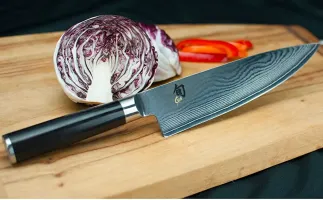
Shun Classic Chef's KnifeShun Classic Chef's Knife

The chef’s knife is widely considered the workhorse of the kitchen.

1. Chef's Knives

The chef’s knife, which has a broad blade that tapers to a pointed tip, is probably the most versatile of the three kitchen knives we’ll talk about today. 


The pointed tip comes in handy when trying to get into small spaces, the curved blade allows you to rock the knife back and forth when mincing, and the broad heel provides enough power to chop through vegetables and meat. These features make the chef knife useful for everything from mincing garlic and slicing veggies to cutting through large pieces of meat and disjointing poultry. 


When choosing the best chef’s knife, there are a few factors to consider.


Knife Length

A chef’s knife can be anywhere from 6” to 12” long, with 8” being the most common length. This length balances the control of shorter knives with the stability and extended cut length of longer knives.

Western vs. Japanese Knives

Japanese knives have blades that are light and thin, with a straighter edge that allows for less rocking and encourages shorter, downward cuts. Due to the thinness of their blade, they are often sharper than Western blades. These blades are ideal for tasks that require precision, like thinly slicing vegetables.

German and French chef’s knives tend to have more curvature to allow for a greater rocking motion when cutting. Western blades are heavier, making them great for heavy-duty tasks like chopping meat, dicing dense vegetables, and cutting through joints.

In the words of our team member,

Paige Knight